


June 16th, 2025- The day our lives were forever changed

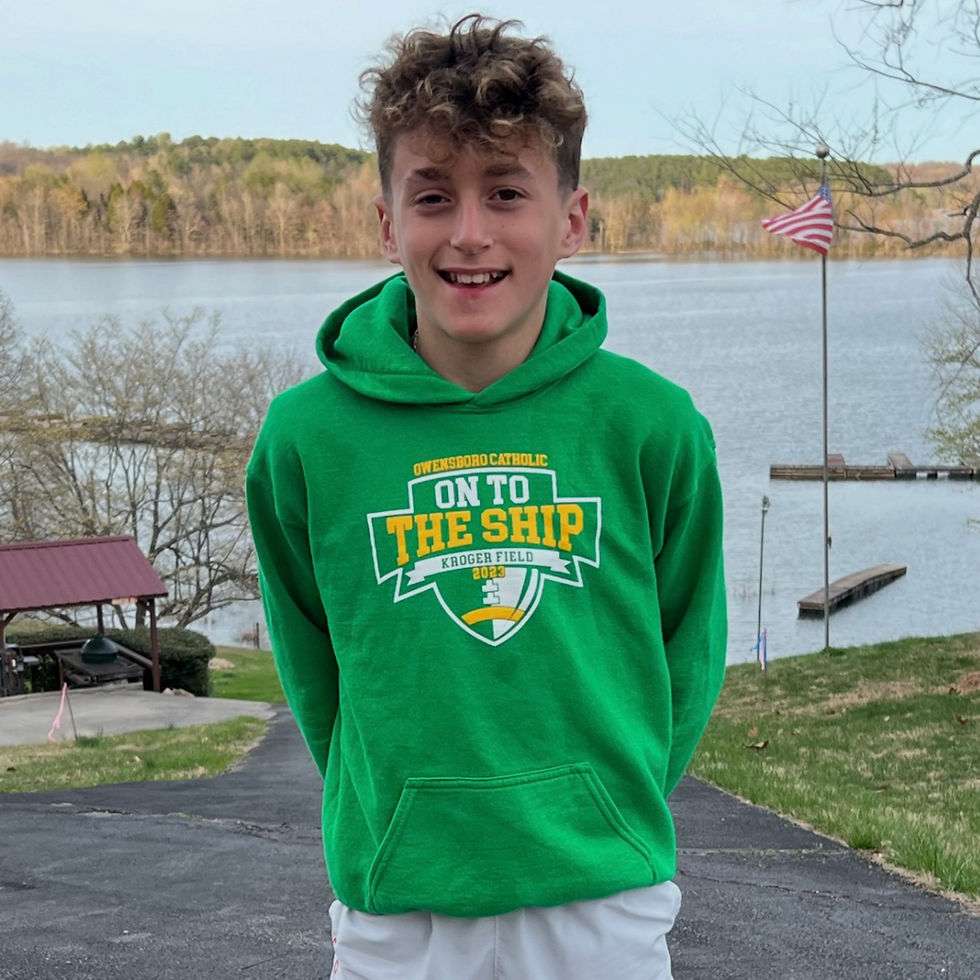
June 15, 2025—Father’s Day. It was a rowdy house, clothes everywhere, the boys playing PlayStation. I kissed everyone goodnight and went to bed, saying, “See you in the morning.” It was just a normal night—until it wasn’t.
At around 2:30 a.m. on Monday, June 16, our world changed forever. Cam walked into our room complaining that his right arm was really hurting, worried he wouldn’t be able to go to Big Splash with his friends the next morning. I spent about 20 minutes rubbing it, but it didn’t get any better. I went downstairs to get some ibuprofen, and while I was gone, I heard commotion upstairs. I ran up to see what had happened and found Cam on the ground. I asked if he had fallen. He said no—he just couldn’t stand up anymore, so he sat down. I helped him up, and he told me his hand and right leg were starting to go numb. My mind immediately went to stroke. But isn’t it rare for a child his age to have a stroke? No, it couldn’t be that. But something isn’t right. I woke Brett, and we quickly decided it was time to take him to the hospital.
Brett picked him up and carried him downstairs. By this time, Cam was screaming in pain—a terrified, excruciating scream I will never forget. He looked at Brett and asked, “Dad, am I going to be okay?” We debated calling an ambulance, but he was declining so quickly that we decided it would be faster to drive since we live across the street from the hospital. I woke Easton and told him we were going to the hospital and to please go lay with Tucker. That’s all I could say. He asked why Camden was screaming, and all I could answer was, “I don’t know.” He was so scared.
When we got to the hospital, Cam had already lost all movement in his right arm and leg. The ER tech, Ashley, immediately triaged him and took him back. The nurse and doctor met us in the room and quickly called a code stroke. I heard them mention they had never called a stroke on a child before but didn’t know what else it could be. They started an IV, performed a neurological exam, and began prepping him for imaging. Before we knew it, there were at least ten people in the room. He was rushed off for scans—all of which came back normal—and they began having us sign paperwork for Life Flight to Norton’s.
Stunned—that’s all we felt. Everything was happening so fast, yet somehow it felt like time had slowed down. We had no answers, and neither did they. I remember calling my mom, but I could barely speak. I didn’t even know what to say.
Life Flight arrived around 6:00 a.m. They performed a quick exam and had him do a breathing test called a NIF. He scored a -23. They explained that normal is 25–30 and above. While he showed some respiratory muscle weakness, it wasn’t critical yet. He was deemed stable for transport, and by 6:30 a.m., he was in the air. We couldn’t ride with him.

Nothing prepares you for the moment you see your child being loaded into a medical helicopter. We ran home to grab a change of clothes, still not fully grasping the severity of what was happening. As we stepped outside, we heard a helicopter overhead. We hear them all the time—we’re in the direct flight path—but this time it wasn’t normal. We looked up and saw the “Just for Kids” logo on the bottom. It was Cam. It felt like the life had been taken out of me as I collapsed into Brett’s arms. Reality was starting to set in—he wasn’t okay.
Still, we drove to town to drop off Brett’s truck so his crew would have a vehicle and could continue working as usual. Shock is a strange thing. It’s like watching your life unfold from a distance, not fully present. You know it’s bad, but it doesn’t feel real.
About 30 minutes later, we finally left town. As we were about to get off 231 onto I-65 toward Louisville, we got our first call. They had arrived, and he was stable. Thank God. I asked if I could talk to him. Hearing his voice brought me to tears. “I love you, Mom.” “I love you, Dad.” He made it. They asked for consent for a STAT MRI—he needed to go immediately. We gave consent.
About 20 minutes from Norton’s, we received another call. They asked how far we were from the hospital. I told them and asked how the MRI went. They said he hadn’t gone yet, which didn’t make sense since they had called nearly an hour earlier saying it was STAT. That’s when panic set in. I told Brett something didn’t feel right. Why were they calling again just to check where we were? My mind started racing.
When we arrived at the hospital, we went straight to the emergency department. We barely got his name out before they told us he was in Trauma 1. A trauma room. We walked down what felt like a mile-long hallway. It seemed like everyone turned to look at us. I even heard someone say, “I wonder if that’s Trauma 1’s parents.” We reached the door, and it was closed. Dr. Naomi met us there with a somber, serious look on her face.
She explained that Camden had declined significantly since the last update. They were having trouble maintaining his oxygen levels, and he was beginning to struggle to breathe. His NIF had dropped from -23 in Owensboro to -5. She said, “We’re going to need to intubate him so we can help him breathe and let his body rest.” Life support. Was he dying? It felt like a nightmare. She explained the procedure and told us we could see him briefly before they started.
There he was. He looked at us and smiled. We explained what was going to happen, and with tears running down his face, he asked if he was going to be okay. We told him this was temporary, that he would be comfortable, and that we would see him again soon. My heart was breaking. Was I lying? What was really happening? We still had no answers.
They took us to a small waiting room while they prepared for intubation. We broke down, holding each other. Our baby—our funny, soccer-loving, kind, and courageous boy. How did we get here?
It felt like forever before they came back. We later learned there were complications. He declined severely and had to be bagged four times during the intubation. When we were finally allowed back in, about 45 minutes later, nothing could have prepared us. Seeing our child connected to tubes and machines, knowing they were keeping him alive—it was unbearable.

We walked to his bedside and held his hand. He was sedated, but tears were still running down his face. I began singing his song—the one I had sung to him a thousand times—but this time it was different. I needed him to know we were there, that we weren’t going anywhere. He squeezed my hand, as if to tell me he knew. I kept thinking, his left side is still moving… maybe we caught this in time—whatever “this” is.
Around that time, my mom called to say they had arrived. I went to meet them. Normally only two people are allowed in the room, but because he was so critical, they made an exception. There was that word again—critical. They said it so many times, but we couldn’t fully grasp what it meant. We were focused on whether he would walk again, not realizing his body was shutting down before our eyes.
Once he was stable enough, they took him for the MRI. We waited in a private family room while doctors came in and out, trying to piece together what was happening. The MRI showed what they initially called a “mass” in his spinal column. They said more testing was needed, but that was their first impression. Cancer. How do you even treat something like that on the spinal cord? We broke down. My baby.
Later, in the PICU, they had him settled. They told us he became very agitated during the MRI and needed increased sedation. As we stepped into the hallway to switch out with family, the doctors stopped us. There were six of them gathered around Camden’s MRI images. They explained that what they initially thought was a mass showed signs of vascularity. They sent the images to Dr. Laurent, an adult neurosurgeon at Norton’s in Brownsboro.

He reviewed them and determined it was not a mass, but an AVM that appeared to have ruptured—possibly an aneurysm. They told us they had never seen this at the children’s hospital and would need to transfer him to Brownsboro the next day for an angiogram to confirm. If it was an AVM, they would treat it while he was under anesthesia.
To us, this felt like good news. It wasn’t cancer. There was a plan. A procedure. Hope. We thought we were moving in the right direction. I didn’t realize then that the reason they weren’t taking him immediately was because he was too unstable. They were just trying to get him through the night.
I was overwhelmed with a kind of fear I had never known before—the kind that grips your heart and won’t let go. Every second felt uncertain, and the weight of not knowing what was happening to my child was almost unbearable. My mind raced with worst-case scenarios, and I felt completely helpless. But in the middle of that fear, I found myself clinging to something deeper than understanding—I clung to my faith. I kept whispering prayers, asking God to hold him, to guide the doctors, to carry us through what we couldn’t control. And somehow, even in the chaos and heartbreak, there was a quiet sense of peace. Not because I knew the outcome, but because I trusted that the Lord was already there, already working, and that He would not leave us in this.


Comments